

Get angry!

Last night, I was at the pub watching the Arsenal match with friends. It wasn’t my plan to watch the match at all, but spending two hours looking at Riccardo Calafiori all sweaty couldn’t do me any harm. Inspired by my last piece, where I remembered my life-long crush on Jose Mourinho, a current thought came to my mind while I was watching them play: I want to fight someone. Not because I have anger issues, on the contrary, but because I have been so numb for the past months that football sort of awakens a primitive part of me that gets excited over protecting my identity. When you’re messing with my team, you’re messing with me. Back in Brazil, I would watch the matches religiously. The amount of money and energy and time that I’ve wasted with Grêmio is proportional to the passion and the happiness of having found great friends at the surroundings of the pitch. Most of them don’t talk to me anymore and I don’t know why; it’s not like I’ve outgrown them, but I’ve definitely outgrown football and I don’t like that. Right now, I don’t even know which position we are at the championships, the only information gathered is that apparently a player called Carlos Vinicius is being a game changer, according to bits and bobs from old hincha friends.
When I tell people that I used to fight over eleven men chasing a ball they don’t believe it. There was one time I kept holding a knife, hiding myself from the troublemakers, as my nearly done nose-job couldn’t be botched. I have travelled across Brazil to see Grêmio, got impulsive tattoos and a fucking pixie cut out of a promise after our Libertadores win in 2017. Although it can sound like nonsense, they’re all greedy lads anyway, I had an unbeatable lust for life back then. The thrill of scoring a goal that kept us up, the churrasco pres where the tea would happen and we’d be dancing funk drinking cold beer, the butterflies in the stomach before the penalties. I want to feel that again. When did I stop feeling? I had already drafted half of this piece before Arsenal won because of this I-can't-get-no-satisfaction mood. In England and in South America, it would be rare to find a numb supporter on the benches. We are full of life, and I am aiming for that from now on.
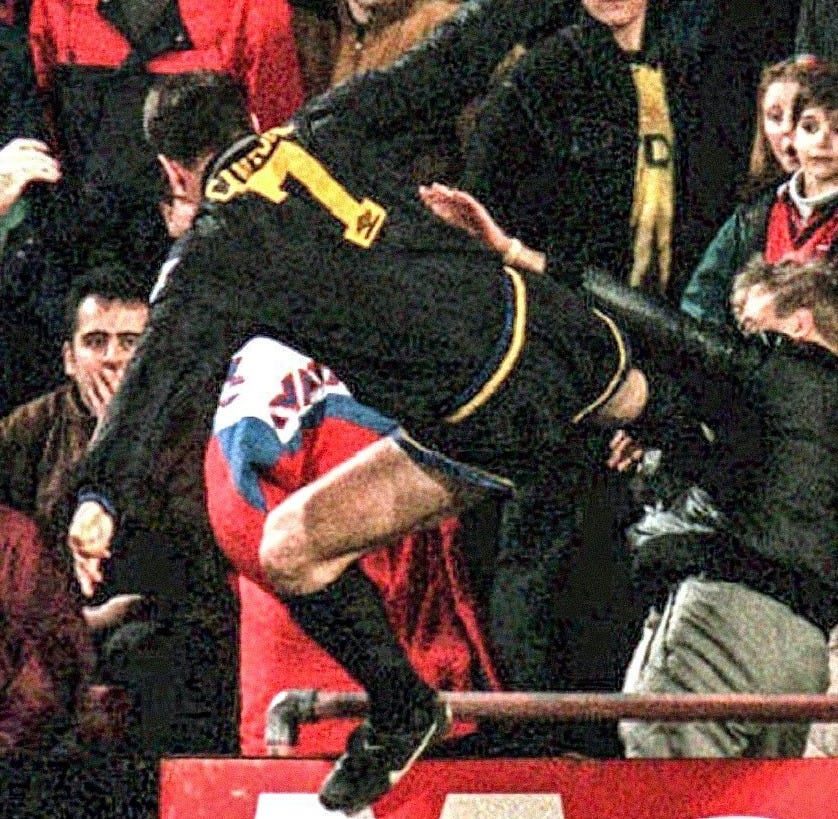
Thinking about anger, the hooligan culture became massive in the United Kingdom under Thatcherism. Hooligans were reputed for their aggression and alleged excessive alcohol consumption before, during, and after football matches. Scary as it sounds, they had every reason to be enraged. In 1989, the Hillsborough disaster resulted in the deaths of 96 Liverpool F.C. supporters and injured a further 766 during the FA Cup semi-final match between Liverpool F.C. and Nottingham Forest F.C. Both the Taylor Report and Thatcher’s government claimed that the tragedy had been caused by organised violence among hooligans. In reality, Liverpool supporters were unable to see the decisive match and therefore entered through alternative central corridors that were already dangerously overcrowded. This led to a crush at the front of the terraces, pressing people against the perimeter fences or causing them to fall and be trampled by the crowd.
In 2009, twenty years after the Taylor Report, an independent panel concluded that the government had manipulated the official account of the events in order to shift responsibility from the State onto Liverpool supporters, reflecting Thatcher’s strong views on hooliganism and football culture. There was never any evidence that Liverpool fans were under the influence of alcohol, and 116 out of 164 police statements had been altered in order to remove “unfavourable comments”. These facts were ultimately confirmed on 17 March 2015 by David Duckenfield, the police officer responsible for security at Hillsborough, who admitted that he had authorised the opening of an alternative gate during the match.
Maybe that’s why English football still feels haunted.
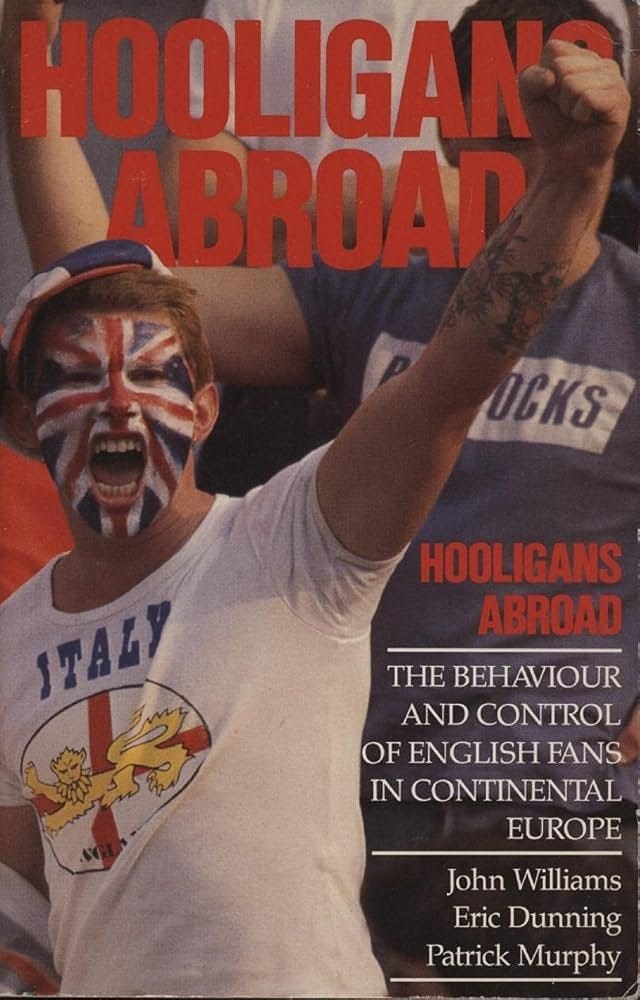
Hooliganism became increasingly framed not merely as a problem related to football violence, but as a broader threat to social order, discipline, and national identity during a period marked by neoliberal restructuring and political conservatism. Working-class football supporters were frequently portrayed by the media and by Thatcher’s government as irrational, aggressive, and morally degenerate, which allowed the State to justify surveillance, policing, and control over public spaces associated with football culture. She had BBC propaganda on her side and shit.
In this sense, hooliganism can also be understood as a form of counterculture emerging from the frustrations of deindustrialised working-class communities who experienced unemployment, social marginalisation, and the erosion of collective identities throughout the 1980s. Although violent practices cannot be romanticised, the figure of the hooligan came to symbolise a resistant political figure. Viewing hooliganism as a counterculture, channeling emotions meant to be suppressed by austerity and recession, makes me wonder in a tomboy Carrie Bradshaw way whether I ought to release my demons cussing at football players and chanting on the tube.
Literature-wise, Nick Hornby studied English Literature at University of Cambridge and also worked as a freelance journalist for newspapers in the British capital. As a middle-class writer, Hornby has addressed social issues connected to football since his earliest works. In 1992, he achieved his first major literary success with Fever Pitch, marking the first moment in which football appears in his writing as a social catalyst, a theme that would later re-emerge in Just Like You. With Fever Pitch, I realised that being an Arsenal fan actually sucked: it can look cool if you’re Dua Lipa, but the team has been horrible for ageeeees. In Just Like You, the cultural backdrop is shaped by the years surrounding the referendum, the transition period, and the United Kingdom’s withdrawal from the European Union. The sense of crisis is already visible in the opening pages, as economic instability and class anxieties permeate everyday life. The story begins in the warehouse where Joseph works, a young Black man searching for new opportunities as a football coach for children. While waiting for the shop to open, two women, Emma and Lucy, engage in casual conversation. Emma is portrayed in meticulous detail as a superficial white woman who perceives all Black people as fundamentally similar and who possesses little cultural knowledge, whether regarding sport or music. Although married, she sexualises Joseph in ways that both Lucy and Joseph himself find uncomfortable. It is through these interactions, and through Joseph’s perception that Lucy differs from Emma, that the two characters begin to form a connection.
Joseph places his hopes in football as a means of transforming his life, much like a large part of Britain’s lower-middle and working classes. Hornby masterfully conveys the feelings of those who perceive sport as their only viable prospect for social mobility, combined with an intense emotional attachment to the game itself. Nevertheless, the novel also demonstrates that genuine success remains accessible to very few. Competition is relentless, not merely local but global, and football is collectively imagined as a form of salvation within the community. Any middle-aged bloke wearing a cap could potentially be a scout from clubs such as Brentford F.C., Tottenham Hotspur F.C., or even FC Barcelona. If no scout appeared, responsibility somehow fell upon Joseph himself, whether because the team was not sufficiently talented or because he supposedly failed to instruct the boys properly. Since becoming a coach, only one boy from the Lane had ever attracted the attention of a scout, only to be dismissed by Barnet F.C. at the age of seventeen. Within this context emerges the so-called “problem” of foreigners. Seven of the eleven starting players for the England national football team in the final of UEFA Euro 2020 were descendants of immigrants. This reality intersects with the opinions of characters such as John, Lucas’s father, who believes that there are “too many foreigners”, reducing opportunities for English boys. Football says a lot about society, doesn’t it? And there's anger everywhere, as you can see, even at the wrong things.
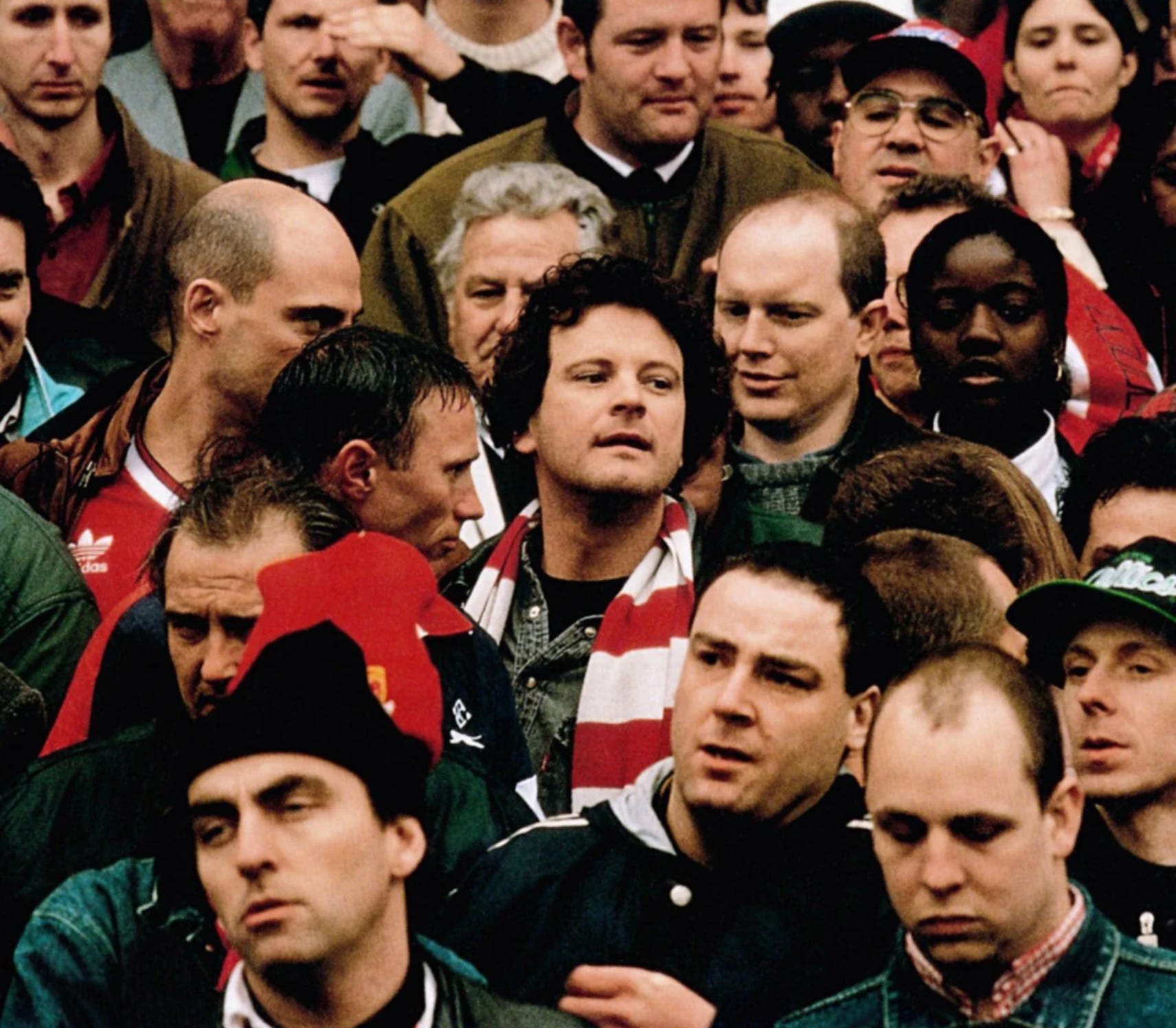
I am happy Arsenal got to the UCL finals. Memories with my grandfather came to mind—how he taught me how to read by showing me football columnists every Monday morning. Maybe I’ll reconnect with my female rage once the World Cup starts. Brazil stands a chance this time, finally, and I can’t wait to be at the pub during late hours. If you catch me getting into a fight, scrapping with someone, please back me up (and help me protect my nose). I want to feeeeeel!!
My parents witnessed Cantonas kung fu kick at selhurst!! Iconic. That said, I agree that football hooliganisms tone is almost always reflective of wider social issues. And while the fight is cathartic and sometimes downright hilarious, my favourite football moments have always had an undercurrent of true, pulsing love. Can’t wait to World Cup with you mama, I’ll protect that pretty nose of yours!